
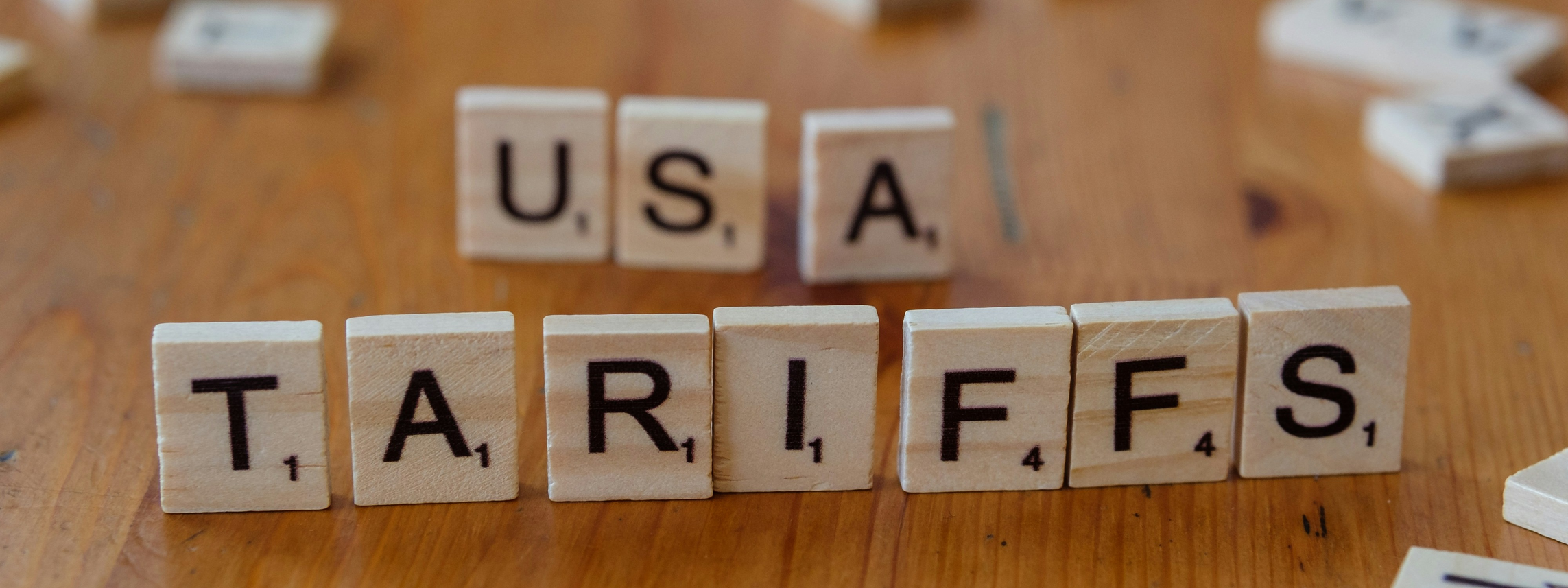
Tariff Update: February 2026
On February 20, the U.S. Supreme Court struck down President Trump’s use of the International Emergency Powers Act (“IEEPA”) to impose tariffs in a 6-3 decision.
The Refunds
While the Supreme Court decision is clear, imposing tariffs under IEEPA is illegal, the Supreme Court was silent on refunds. Likewise, statements from administration officials indicate refunds are unlikely unless explicitly required by court order. And even then, the timing and process for any potential refunds remain unclear. That means we have to wait for the Supreme Court to remand the case to the Federal Appeals Court, then the Federal Appeals Court has to remand the case to the Court of International Trade (CIT). Then, the CIT must announce a decision on refunds, whether they should be given, to whom, and how they should be given. This process could take months, with a decision not announced until late Spring at the earliest.
It is possible that the CIT could rule that only companies that filed lawsuits are eligible for the refunds. But that is unlikely in the face of the clear decision by the Supreme Court. It is also possible that, even if the CIT clearly states that all IEEPA tariffs paid must be refunded swiftly, the refund process could face administrative delays or implementation challenges.
Even under the best of circumstances, refunding $175 billion to over 300,000 importers could take time. U.S. Customs and Border Protection (CBP) has a lot of experience with managing refunds, including for our own industry after the Generalized System of Preferences (GSP) expired for 9 months in 2017 before it was retroactively renewed, as well as currently after the African Growth and Opportunity Act (AGOA) and Haiti HOPE/HELP trade preference programs were retroactively renewed in late January after a four month expiration. Obviously, the order of magnitude for refunds in this circumstance are much different.
To preserve your right to potential refunds, we urge you to protest the liquidation of every import entry affected by the IEEPA tariffs. If any entries have already been liquidated, we urge you to still file a protest. This step is important, as there is concern that CBP might determine refunds are not required for entries that have already been liquidated.
We are monitoring whether refund processing could vary depending on procedural status, including whether a company filed a lawsuit.
The TGA will follow the process closely and update members as we learn more.
The New Tariffs
On February 20, President Trump issued an Executive Order ending the IEEPA tariffs. CBP then issued a message that said all IEEPA tariffs ended on February 24 at midnight Eastern Time.
On February 20, President Trump also issued a Proclamation imposing new global tariffs of 10% on ALL U.S. imports under Section 122 of the Trade Act of 1974. These new tariffs were imposed on February 24 at 12:01 Eastern Time.
As with the IEEPA tariffs, these new 10% tariffs are stacked on top of normal tariffs.
Example — Hardsided luggage from Cambodia:
20% normal tariff + 10% Section 122 tariff = 30% total tariff
On February 21, President Trump announced over Truth Social that he would raise the Section 122 tariffs from 10-15%. However, as of February 25 at 10:40AM Eastern Time, President Trump has not yet issued the Proclamation implementing the 15% tariff. So, the 10% Section 122 tariff remains in place.
Please note that Section 122 tariffs are temporary, and can only remain in place for 150 days, unless an extension is affirmatively approved by Congress. That means the Section 122 tariff will expire on July 24, 2026. More on that below.
What Does That Mean for Countries that Had IEEPA Tariffs that Were Higher than 10 or 15%
As of this moment (February 25 at 10:40AM ET), all countries are now subject to the 10% Section 122 tariff, regardless of whether they had higher tariffs under IEEPA, or have negotiated an Agreement on Reciprocal Trade (ART) with the United States.
Some examples:
- China – Formerly 20% IEEPA tariff, now 10% 122 tariff
- Vietnam – Formerly 20% IEEPA tariff, now 10% 122 tariffs
- Cambodia – Formerly 19% IEEPA tariff, now 10% 122 tariff
-
India – Formerly 25% IEEPA tariff, now 10% 122 tariff
The Future
As noted, the 122 tariffs are temporary, expiring July 24, 2026.
Trump administration officials, though, have indicated that they will use this interim period to launch other tariff authorities, most notably Section 301, so that tariffs on all countries will return to IEEPA levels before the Section 122 tariffs expire.
As a result, the next few months will see a flurry of Section 301 investigations, hearings, and announcements, similar to what the industry experienced in 2017 and 2018, that eventually led to the imposition of the 25% Section 301 tariffs on U.S. imports of travel goods from China.
While the TGA will continue to push to have travel goods exempted from these new Section 301 tariffs, it is important to note that administration officials have indicated that these 301 investigations are likely to result in tariffs returning to IEEPA levels before the current Section 122 tariffs expire.
Conclusion
TGA again urges you to file your protests with CBP on each and every entry. Otherwise, stay tuned.
Photo by Markus Winkler on Unsplash